The story of permaculture in Whāingaroa begins, as many good stories do, with a closing door.
In the late 1990s, Raglan’s landfill shut down. But the tides still moved in and out, and people still needed somewhere for what they threw away. For some communities, that might have been the end of the story – trucks hauling waste elsewhere, decisions made far away. In Whāingaroa, it was the beginning.
A small group of locals – Peter Howarth (PJ), Pine Campbell, Tuihana, Katarina and the Mataira whānau, Liz Stanway, Rick Thorpe and others – believed the community could solve its own problems. They had heard of permaculture, a design system that views land, people, waste, food, water, energy and community as one living whole.
“Zero waste, one of the permaculture principles, offered a solutions approach with local economic, social, cultural and environmental benefits,” recall Liz Stanway and Rick Thorpe. “This holistic approach to the problem was supported by Whaea Eva Rickard and the wider community.”
“With free access to the landfill until that time, the community had been unaware of the real cost of waste. The Council’s solution was a transfer station sending mixed waste to a landfill 50 kilometres away. Transport and gate charges meant a huge cost for a small population.”
“At the same time, high unemployment and few opportunities for young people meant many left over the divvy and never came back.”
In 1999, educators Bryan Innes and Jo Pearsall were invited to run a Permaculture Design Course (PDC). Seventeen local change-makers gathered – gardeners, activists, dreamers and practical doers – learning not just how to grow food, but how to design a resilient community.
“Back then some shops and cafés closed over winter to survive, tourism was minimal, and the closure of the fishery contributed to a local economic downturn,” Liz says. “Council budgets were focused elsewhere, and the coastal town was largely left to figure things out for itself.”
“Whaea Eva used to say, ‘Don’t wait for permission,’ so bringing like-minded people together under the permaculture framework helped us focus on what we could achieve.”
Something shifted. The ideas moved off the page into kitchens, backyards, schools, marae, workshops and council meetings. The course didn’t end – it grew.
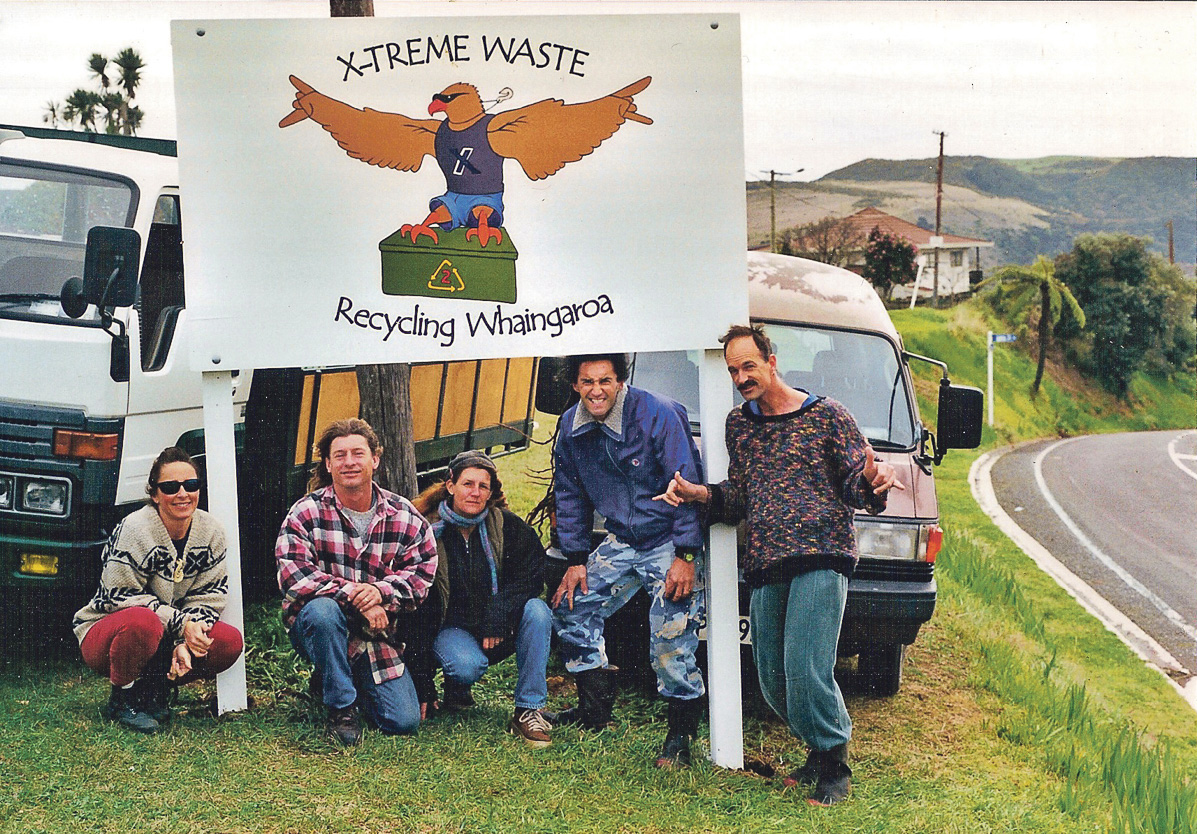
From that spark emerged Xtreme Zero Waste, founded on the radical idea that Raglan could manage its own waste. Alongside it, the Whāingaroa Environment Centre – Te Pokapū Taiao o Whāingaroa – became a hub for environmental learning and action.
Over the following decade, permaculture continued to grow. The Environment Centre actively promoted and invested significant energy into permaculture learning, hosting permaculture weeks and months filled with workshops, shared skills and community knowledge exchange. These initiatives helped embed permaculture thinking deeply within Whāingaroa, while Xtreme Zero Waste focused on the demanding work of running a pioneering community enterprise.
In 2010, the permaculture community hosted the National Permaculture Hui at Pōihākena Marae – recognition that something special had taken root. From this came the first locally run PDC, delivered by Liz, Rick, Phil McCabe and others. Permaculture in Whāingaroa had found its own voice.
Between 2013 and 2019, residential intensive courses at Solscape brought students from around the country to experience the harbour’s unique culture and climate. They learned from the land itself – coastal winds, volcanic soils, community projects and lived experience.
Then the courses paused. Seven years passed. Gardens kept growing, children became adults, and the early work settled into the fabric of the town.
More than twenty-five years after that pivotal course, the threads are being gathered again. Xtreme Zero Waste and the Environment Centre have merged, their roots intertwined. The community that once learned to design for survival is now preparing to design for the future.
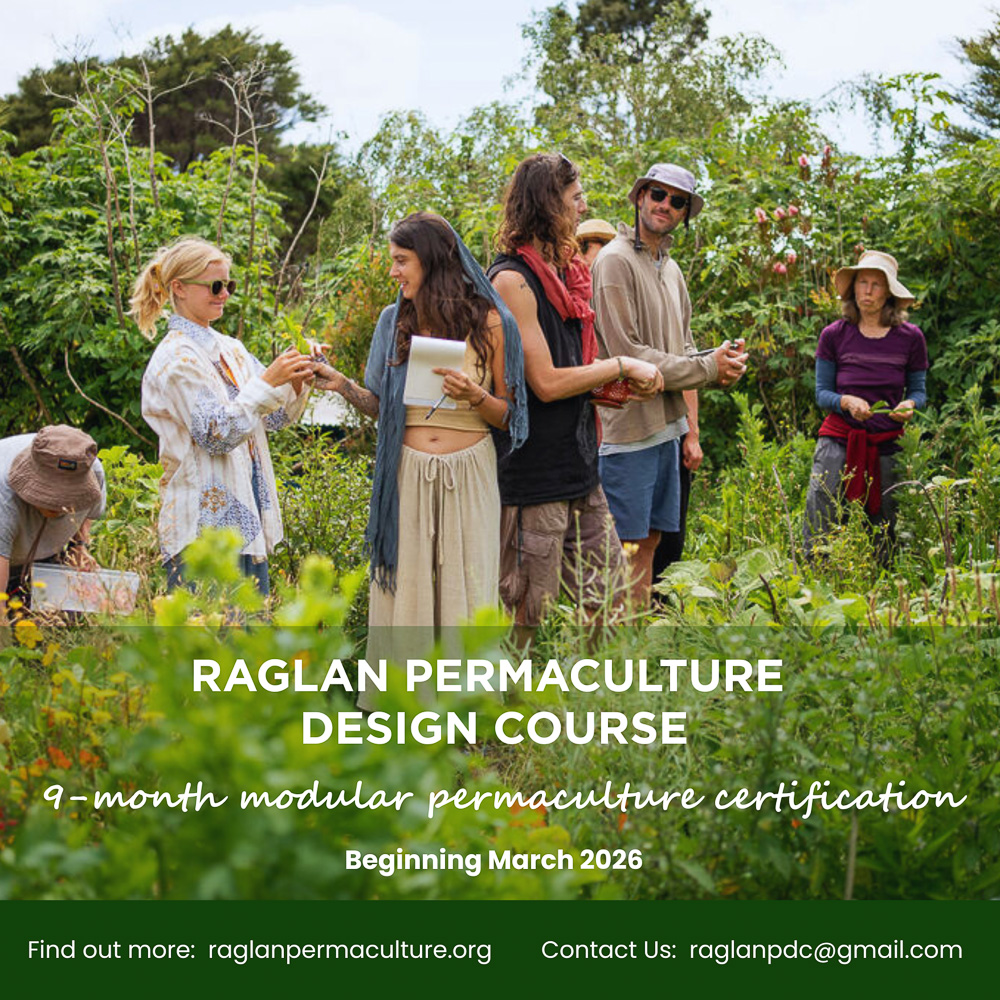
The Permaculture Design Course is returning to Whāingaroa – not as something new, but as something remembered. Delivered by a collective of local practitioners, including Liz and Rick as course mentors, the nine-month programme draws on decades of experience and the challenges of what lies ahead.
“As Whāingaroa continues to evolve and change, the PDC is a chance to reconnect with the core ethos that has served this community so well over the past 25 years,” says course tutor Finn Mackesy.
“The course offers practical skills you can apply in everyday life. I’ve been facilitating permaculture learning for nearly 20 years and haven’t met anyone who regretted doing a PDC – it’s a powerful investment in personal, whānau, neighbourhood and community resilience, land stewardship and community development.”
Walk through Raglan today and you can still see that story everywhere: compost bins behind cafés, restored wetlands, thriving community gardens and the quiet confidence that small towns can do big things together.
As course coordinator Pippa Hayes puts it, “The first Raglan PDC grew out of a community wanting to shape its own future. That impulse feels even more urgent now, as environmental, economic and social pressures intensify.”
“Reviving the course strengthens a significant legacy while building the skills, connections and confidence needed for the years ahead.”
The 2026 Raglan PDC runs from March to November, visit www.raglanpermaculture.org to find out more