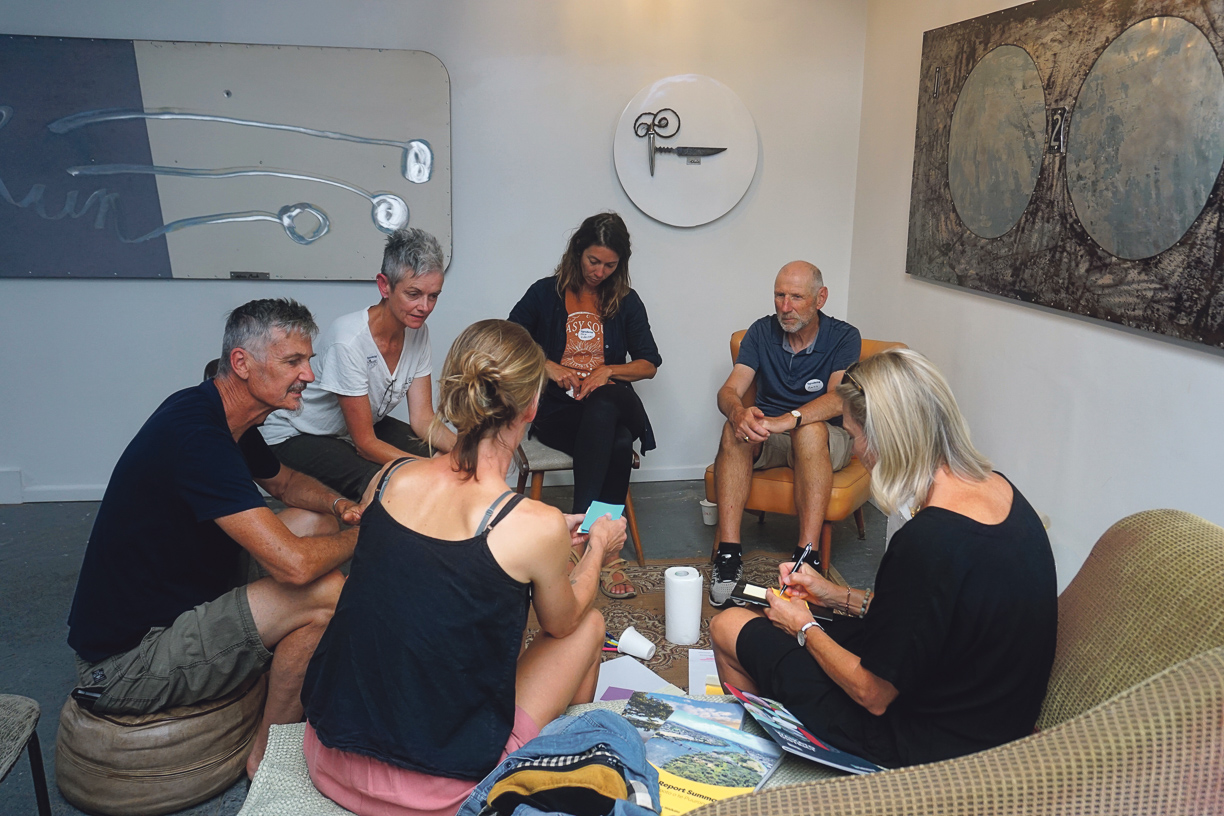
Raglan’s business community recently gathered for a hui focused on developing a strong, sustainable local workforce.
Hosted by Whāingaroa Raglan Destination Management Organisation/Go Raglan and the Raglan Business Chamber, the hui Shaping a Stronger Local Workforce brought together employers from hospitality, tourism, manufacturing, retail, professional services and the outdoors sector.
WRDMO manager Jacqueline Anderson says the turnout and depth of conversation reflected how critical workforce issues have become for local businesses. “What we heard clearly is that businesses are committed to employing locally, but the system around them isn’t always set up to support that,” she says. “This kōrero is about listening first, and then finding ways to turn those insights into practical actions.”
A number of common barriers to recruiting locally were identified, including a small and transient labour pool, high staff turn-over, and challenges around reliability and retention. Accommodation shortages were frequently raised, particularly for seasonal and full-time workers, alongside the difficulty of sustaining employment through the off-season.
Skill shortages emerged as another strong theme. Businesses reported difficulties attracting experienced and qualified staff, especially for leadership, management, and specialist roles. Gaps in literacy, numeracy, work readiness, and people-management skills were seen as ongoing challenges across sectors. Many employers noted the time and cost involved in training staff, particularly when relying heavily on on-the-job learning.
Tourism and Events Workforce Development Advisor Jami Dickson says the feedback highlighted both challenges and opportunities. “There’s a lot of goodwill here and a desire to support local people into work,” she says. “What we’re hearing is the need for better pathways – especially for young people – and more coordinated training and support that works for both employers and jobseekers.”
The transition from school into employment was a key focus of discussion. While businesses see real potential in Raglan’s rangatahi, many felt clearer pathways, work experience and mentoring are needed to bridge the gap between education and the workplace.
Ideas such as shared labour pools, local training hubs, coordinated induction programmes, and opportunities to gain recognised qualifications locally were also explored.
The insights gathered will now inform the next phase of workforce planning, including an employment gap analysis, a workforce development strategy focused on local and youth employment, and practical training and support recommendations.
The consultation period remains open until Tuesday, March 31, with opportunities for one-on-one conversations with Jami or written feedback via a follow-up survey.
Organisers thanked all attendees for their valuable insights and acknowledged the ongoing support of Waikato District Council’s Takitini Economic Development team.