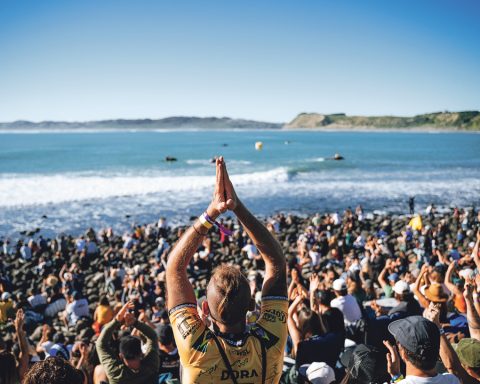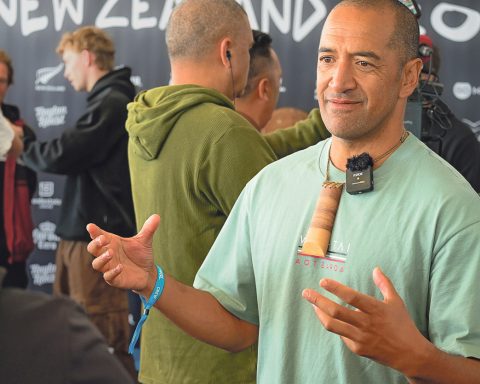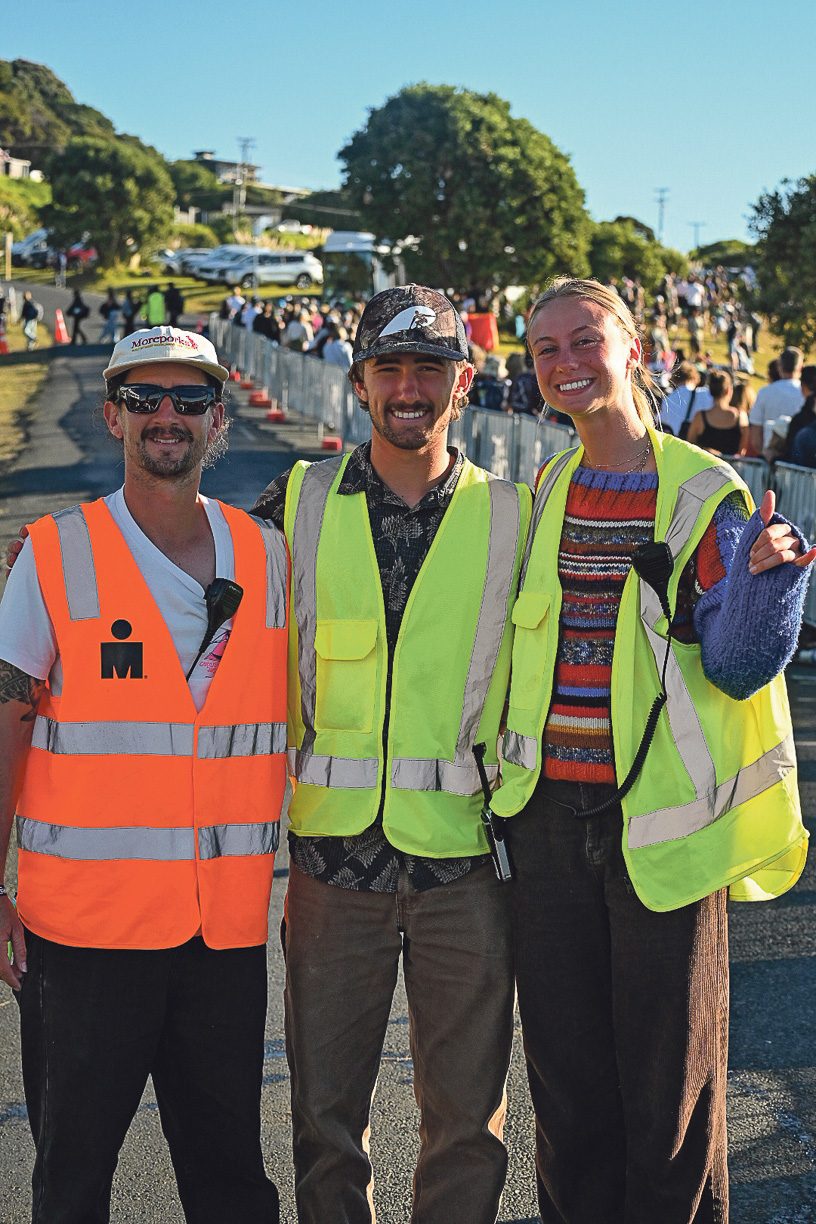
While the world’s best surfers battled it out at Manu Bay last month, another crew had quietly been keeping things running behind the scenes: directing traffic, helping with parking, or setting up infrastructure.
Many of those volunteers came from Christian Surfers New Zealand, a non-profit that combines surfing, and faith. During the World Surf League Championship Tour stop in Raglan, around 30 volunteers from all over the country travelled to Whaingaroa to help support the event.
For anyone who spent time at the Raglan Airfield park-and-ride over the busy WSL weekends, they were hard to miss in their hi-vis vests, helping move crowds smoothly between town and Manu Bay.
Considering more than 5,300 spectators poured into Raglan on peak days, the traffic and transport operation was widely seen as a success. No small task for a town with one main road leading to the break.
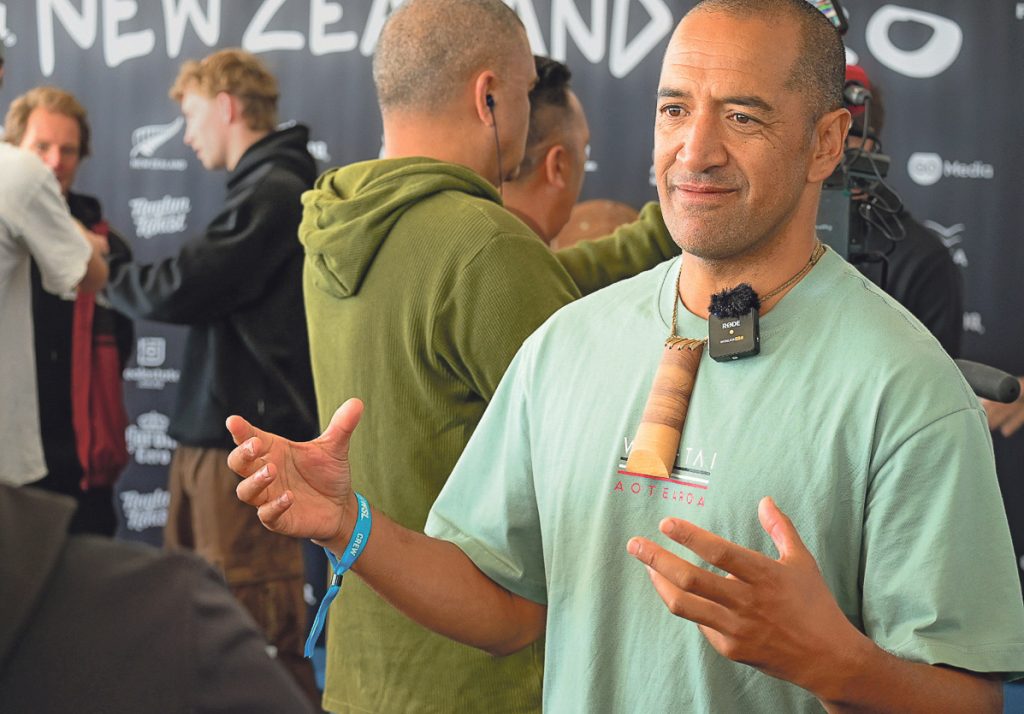
Christian Surfers national director Logan Mills says serving communities is simply part of what the organisation is about.
“Every event, small or big, needs a lot of manpower,” he says. “We’ve got a pretty epic community who love to serve, and we’ve got crew around New Zealand, so we felt really honoured to come and support behind the scenes.”
Volunteers came from as far as Christchurch and Northland, with some helping from the very start of the event build all the way through to pack-down.
Logan, originally from Hamilton, quickly found himself putting his building background to use.
“We were there helping with fences, scrim, infrastructure, parking, whatever needed doing really,” he says. “A first-time event like this has a lot of moving parts, so we just wanted to be the backbone of help in the background.”
For local Christian Surfers mission leader Caleb Cutmore, having volunteers travel to Raglan made a huge difference.
“All the volunteers were from out of town as they needed to commit for most of the event which a lot of the local CS crew couldn’t pull off,” he says.
Christian Surfers started in Australia in the 1970s and now operates in more than 30 countries worldwide. In New Zealand, there are currently 18 local missions connecting surfers through community dinners, youth groups, surf events and volunteer projects.
In Raglan, the local mission runs fortnightly Surfside Surfers gatherings for high-school-aged kids, combining surfing and conversations around life and faith. They also host regular potluck dinners to create connection in a town where people can easily drift apart despite its tight-knit feel.
“It’s about creating community that surfers can belong to,” Logan says. “We just want to love and serve the surf community in the best way we can.”
For Logan, surfing and spirituality naturally overlap.
“The ocean is very healing,” he says. “There’s something about surfing that brings the child out in people again. You come back in from the surf just completely stoked.”
That sense of joy and connection was on full display during a Christian Surfers community night held during the WSL event week, where locals and visitors gathered at the Christian Camp for food, and conversations; including adults enthusiastically throwing themselves into a giant tarp barrel simulator on surf skates.
“It sounds silly, but people absolutely froth it,” Logan laughs. “It’s probably the closest feeling to getting barreled without actually getting barreled.”
While the WSL brought international attention to Raglan’s famous left-hand point break, Logan believes the event also highlighted something else: the strength of the local community.
“Raglan is the mecca of surfing in New Zealand,” he says. “But it’s also a small community, and that’s what makes it special. People care about each other here.”
He says Christian Surfers wanted to help ease some of the pressure locals had been worried about in the lead-up to the event, especially around congestion and logistics.
And although volunteers gave up long days of their own time, Logan says the crew felt they got something valuable back in return. “To give your time without expecting anything back is really special,” he says.
by Annika Stricker