A recent tip-off that the Raglan Club had employed a new manager got me thinking. Realising I didn’t know much about the Club or its manager, I decided to do a bit of research on both.
Although the Raglan Club opened in 1956, it was only in the mid-1990s that it was decided a manager needed to be employed. The Club had grown so much that it was no longer feasible for volunteers to run it.
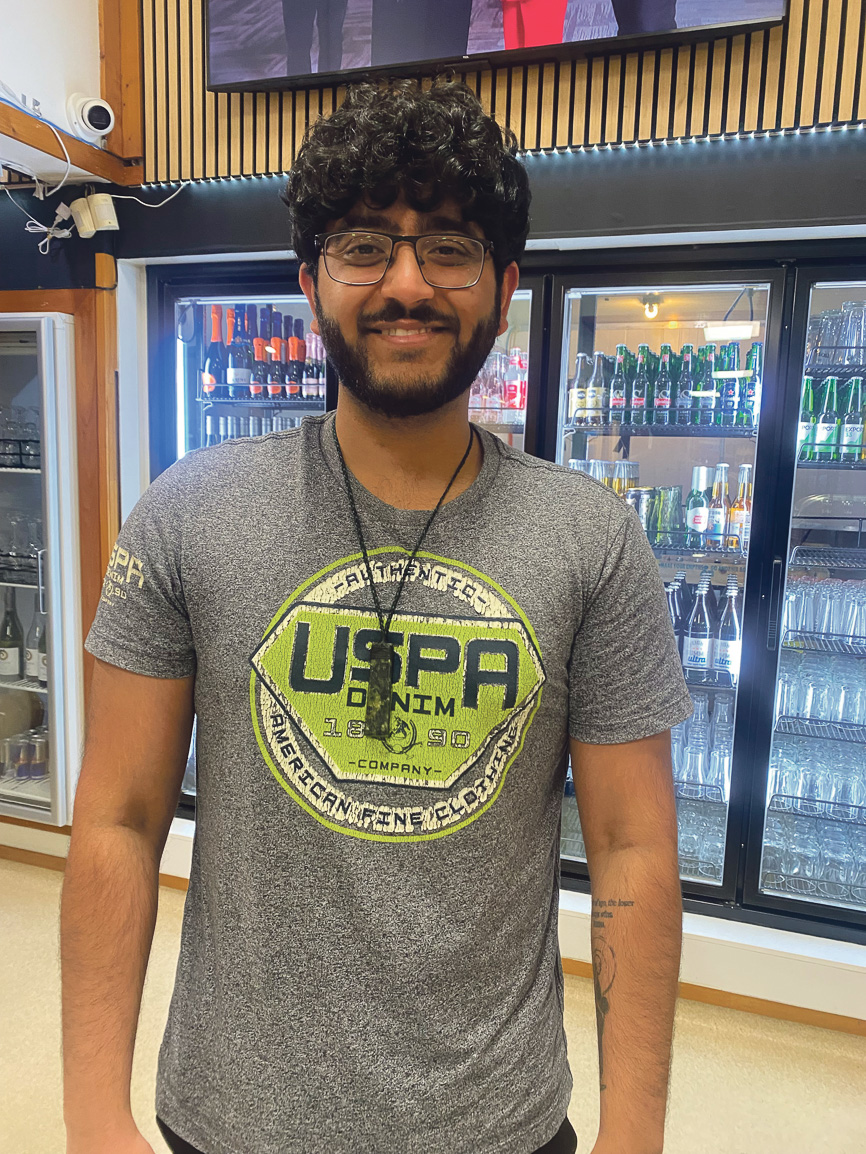
Firstly, the manager. He is Shashank Kohli, originally from India, where he owns and runs a hotel from afar, and he has been in his new job for a couple of months.
He says Raglan is one of the most beautiful places he has ever lived, despite having travelled extensively around the world. His previous roles in New Zealand were as outlet duty manager at the New Plymouth Club and food and beverage duty manager at the Novotel in the same city.
Community clubs began appearing in many small towns early in the 20th century. This was particularly the case in “dry areas” such as the King Country, where the sale of alcohol was banned.
These were known as chartered clubs and provided places where members could socialise and drink. As long as members behaved themselves, the local constabulary usually turned a blind eye to the consumption of alcohol.
Historian Jock Phillips sheds some light on the subject in his article, “Men’s Clubs”. He comments that men have always enjoyed spending time with their mates. Most workplaces were male-dominated in the 19th century, so it made sense that men would socialise together too.
“Men’s clubs were set up primarily so that men could socialize with other men”, rather than having a focus on sport or community service.
The types of clubs mentioned included gentlemen’s clubs. One example was Wellington’s Wakefield Club, which sought to preserve a “high British tone”. Affluent men could socialise, smoke, drink, dine and play billiards together “without the benefit of their womenfolk” being present.
It was only in the 1990s that protests by women forced some change. The Dunedin Club, where some members reportedly said women would be admitted only over their dead bodies, finally allowed women to join in 2001.
As clubs proliferated under different names, including cosmopolitan clubs, workingmen’s clubs and returned services clubs, it became clear that they mostly had the same purpose: to provide a safe environment where people could relax and socialise.
It appears that dissatisfaction with hotels also spurred the establishment of clubs. Beer prices were considered too high and there was frustration with the service provided at local watering holes.
This was certainly the case in Raglan in the early 1950s.
As noted in a comprehensive history of the Raglan Club, written and produced for its 50th jubilee celebrations, all seemed settled and prosperous in Raglan at the time, but simmering discontent was growing louder.
Locals “reckoned, with passion, the social amenities of the town were below par and the 6 o’clock swill had developed into a shambles”. The bars were said to be small and poorly equipped and, according to the majority, the hotel served the wrong brand of beer.
Some venerable gentlemen got together, visited established clubs around the country and decided this was the answer to their problems.
Because it was a solution for the community, created by the community, most initial resistance soon vanished. The first Raglan Club opened on 23 August 1956, with Harold Orr as its first president.
Sir Leslie Munro offered Lord Raglan’s family crest to the Club. Premises at the Cameron Estate were purchased in 1958 and the building also provided a room for women and children.
Unlike the more exclusive gentlemen’s clubs, it was not long before women became members too. Their menfolk realised how much they could contribute, not least because they were great fundraisers.
The Club, initially known as the Raglan Services Club and later the Raglan Services and Citizens’ Club, continued to expand its membership and buildings until it became what we see today.
Although it was not a sports club, the Club always aligned itself with local sporting groups, most significantly the golf, bowling and fishing clubs. In 1998, it amalgamated fully with the Raglan Bowling Club.
The Club has also long provided activities such as pool and darts for its members.
Shashank says the Club hopes to strengthen and support its existing groups while also considering the introduction of new ones, so “there is something for everyone”.
One of his goals is “to break the misconception that kids don’t belong at the Club”.
He believes that, as it is a community club, families should feel welcome there. He would like to introduce activities such as junior pool nights, children’s special nights and other family activities, while making greater use of the Club’s outdoor areas.
From the beginning, the executive agreed that “Goodwill, tolerance and common sense are necessary ingredients for all successful clubs”, and those sentiments have persisted.
When I asked the new manager what he thought the purpose of the Club was, his reply aligned closely with the intentions of its founders.
“I believe the purpose of the Raglan Club is to provide a welcoming, comfortable, and affordable place for the local community – a place where people can relax without feeling they have to be fancy. Our members are more than customers; they’re part of our club family. As a club that has been part of Raglan for almost a century, we’ve grown alongside the community and have always aimed to make a positive contribution wherever we can.”
And what of the RSA? I was a little confused about how it fitted in with the Club.
Returned services associations proliferated in New Zealand from 1916 and were established to support returning soldiers and provide welfare services for them and their families.
The first RSA in Raglan began in 1932 and was initially a branch of the Waikato RSA. It did not have its own premises, so meetings were held in private homes.
The Club executive made it clear that “The Club will always show friendliness and consideration to members of the Raglan branch of the RSA and to RSA members generally”.
Most RSA members also became members of the Raglan Club and came to regard it as their local headquarters, holding executive meetings and other functions there.
This continues today, along with the tradition of returned service personnel, their families and friends gathering at the Club after the Anzac Day service each year.
The Club continues to have a strong association with the RSA and 161 Battery, Royal New Zealand Artillery. It holds memorabilia relating to the battery, which is exhibited in display cases at the Club.
Seventy years on, the Raglan Club continues to grow and fulfil its original intentions. Long may that continue.
We wish Shashank well as he puts his skills and energy into ensuring it does.
Some final positive words from him:
“My vision is simple: to create a place where everyone feels they belong. I want the Raglan Club to continue offering quality facilities, strong social groups, great entertainment, and a welcoming space that our members are proud to call their club. I know there is still plenty of work ahead, but with the right planning, a great team, and the support of our members, I’m confident we can continue building a club that serves the whole community for many years to come.”